

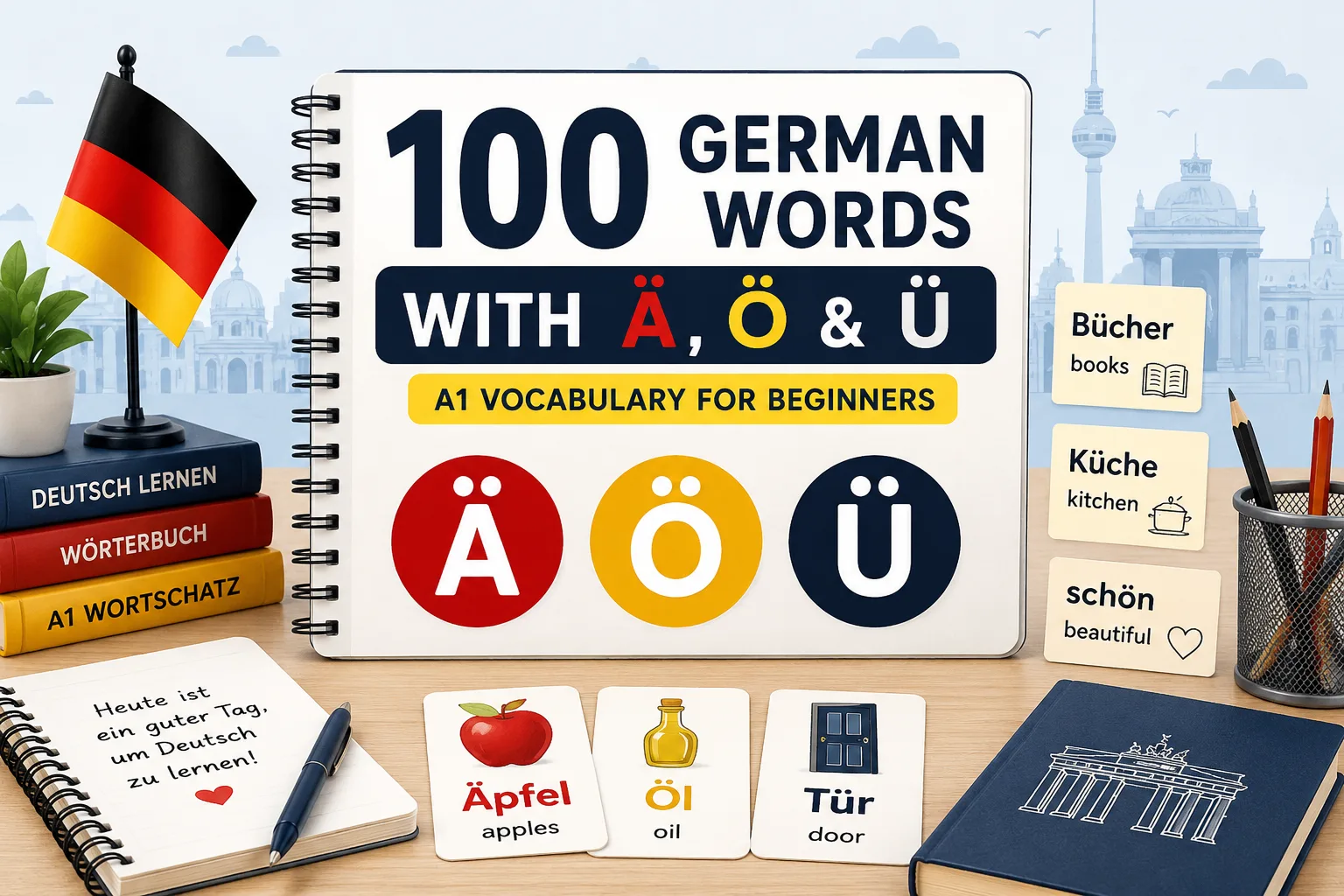
Learning German? One of the first things beginners notice is the three special letters: Ä, Ö, and Ü.
These letters are called Umlauts, and learning simple words with them is a great way to become more familiar with German spelling and pronunciation.
🇩🇪 Start with These Simple German Words
Here are 8 easy examples to start with:
| German | English |
|---|---|
| Äpfel | Apples |
| Öl | Oil |
| Tür | Door |
| Bücher | Books |
| Küche | Kitchen |
| grün | Green |
| fünf | Five |
| schön | Beautiful |
These are common German words that are useful for A1 beginners.
🔤 What Are Ä, Ö & Ü?
German has three special vowel letters:
Ä — Äpfel
Ö — Öl
Ü — Tür
They are called Umlauts.
The pronunciation of these letters can be difficult at first, so regular practice is important. Try reading each word slowly and saying it aloud.
🗣️ Practice Your German Pronunciation
Don’t worry if the sounds feel strange at first.
Start with a few simple words:
Ä: Äpfel, Bäume, Hände
Ö: Öl, schön, hören
Ü: Tür, Bücher, fünf
Read each word aloud several times.
The more you see and hear these sounds, the easier they become.
📚 Learn 100 German Words
Want to practice more German vocabulary?
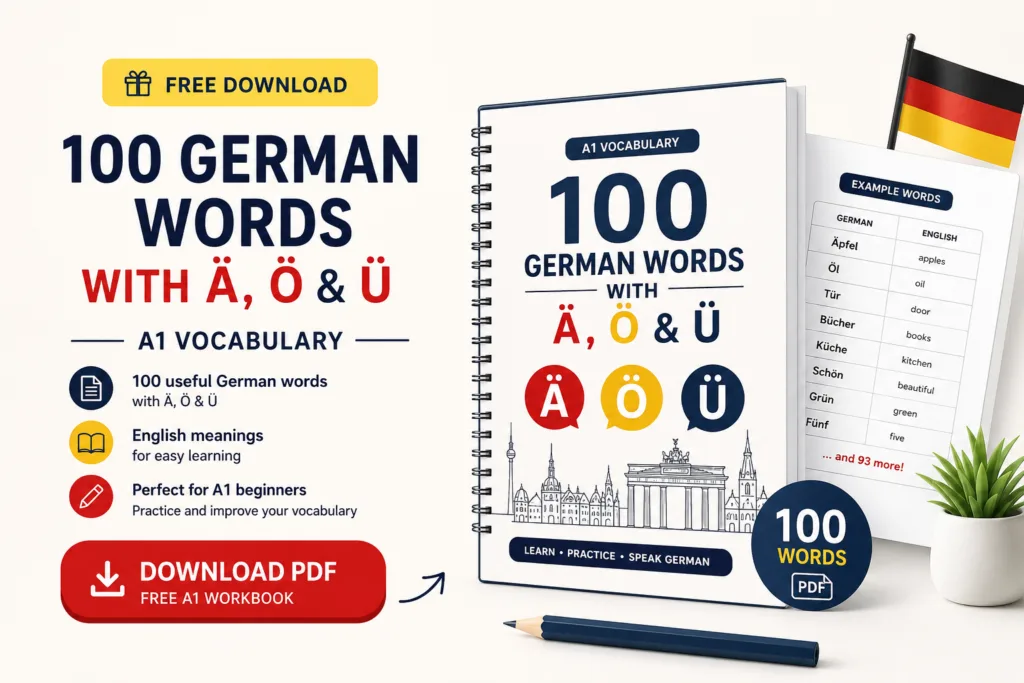
We’ve prepared a free German A1 PDF with 100 German words containing Ä, Ö, and Ü, together with their English meanings.
📥 Free German A1 Vocabulary Workbook
Practice these words at your own pace and use the PDF to review German Umlauts every day.
🇩🇪 Practice a Little Every Day
You don’t need to memorize 100 words in one day.
Start with 5–10 words, read them aloud, and review them regularly.
For example:
Äpfel → Apples
Öl → Oil
Tür → Door
Bücher → Books
schön → Beautiful
Small daily practice can help you build your German vocabulary step by step.
🎯 Ready to Learn More German?
Keep practicing with our German A1 lessons, vocabulary, grammar explanations, reading texts, and free worksheets.
🇩🇪 German A1
Learn • Practice • Speak German Every Day